
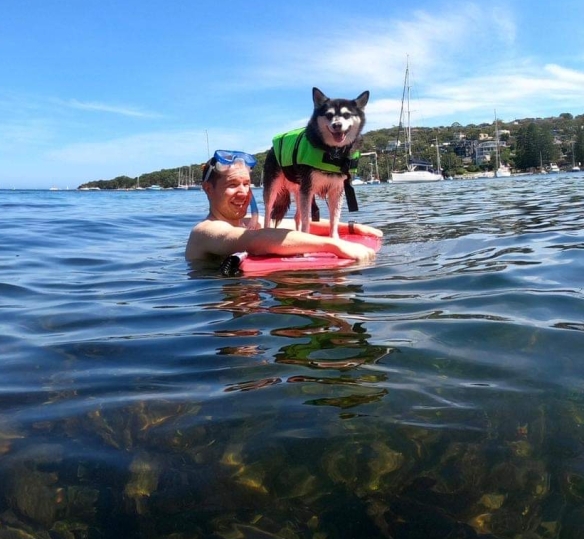
Kodi
in Sydney
Australia’s dog and cat import conditions are among the strictest in the world and are stringently enforced. Managed isolation is also complicating matters, and it is strongly advised that a pet courier company is used to move your pets to Australia. Some have their own vets to sign the final paperwork, some rely on private OV’s (official veterinarians) to complete the export certificates in full. Owners need to check the current import requirements with the Australian High Commission and apply for an import certificate once certain steps have been taken (as below). Owners need to apply to the Animal Plant and Health agency in Carlisle for the export paperwork needed. You need form 2580EHC for dogs and 2432EHC for cats. Requirements can change, and it is the owner’s responsibility to ensure they are following the most up to date protocols (something a pet courier can help with).
Dogs must comply with all conditions on the import permit. Failure to comply with the conditions on the import permit may result in the dog being (at your cost):
- held longer in post entry quarantine
- subject to additional testing
- exported
- euthanased
The U.K. is a group 3 country, a valid import certificate is needed as well as an export certificate from APHA in Carlisle. On arrival in Australia, dogs must spend a minimum of 10 day at the Mickleham post entry quarantine facility in Melbourne, all animals must enter via Melbourne. Dogs cannot be pregnant or suckling young at the time of export. Domestic/Non-domestic hybrids (e.g. wolf dog crosses) cannot be imported, along with prohibited dangerous breeds including dogo Argentino, fila Brasileiro, Japanese Tosa, American pit bull terrier, Pitbull terrier, Perro de Presa Canario or Presa Canario.
Travelling with Dogs
Please click here if you are travelling with cats

Billy
in Perth
RABIES VACCINATION
Timeframe: At least 210 days before date of export
- Dogs must be at least 90 days old to be vaccinated for rabies
- A Veterinarian must check the microchip (or implant one) and give the rabies injection
- If this vet is an OV66 qualified vet, they can also do the first OV66 ID check to submit to MAFF. Separate vets can do these tasks too.
RNAT TESTING (Rabies antibody titre testing)
Timeframe: 3-4 weeks after vaccination, the sample must arrive at the lab at least 180d before travel
- 3-4 weeks after rabies vaccination, a blood test called the RNATT test must be done, and certified by an OV
- If the blood is taken by an OV66 qualified vet, they can do the second OV66 ID check. Both OV66 ID checks need to be completed prior to the blood being taken. The OV66 vets must be from 2 different practices, and.
- Dogs can only be exported to Australia more than 180 days from the date the blood sample for the RNATT test arrives at the testing laboratory with a satisfactory result (not the day the blood is taken). A result of 0.5 IU/ml or more is acceptable, below this you must re-vaccinate and repeat the testing process
- The RNAT test is valid for 24 months from the date of blood sampling
- An OV must check the RNAT report and rabies vaccination certificate, and complete, sign and stamp a RNAT test declaration
Note: There are no exceptions or dispensations available for this mandatory 180 day waiting period.
APPLY FOR THE IMPORT/EXPORT PERMIT and MAKE TRAVEL ARRANGEMENTS
Timeframe: After receiving the completed rabies vaccination and RNAT test declaration, and at least 42d before date of export
- As of 1 March 2021, the import permit will be valid for 12 months or until the Rabies Neutralising Antibody Titre (RNAT) test expires, whichever occurs first. Apply for an import permit from the Australian High Commission. Apply for an export certificate from the APHA in Carlisle.
- Dogs must spend at least 10 days at the Mickleham post entry quarantine facility. There are no restrictions on the airline you choose, but the dog must arrive direct into Melbourne International Airport. Domestic transfers from an Australian city to Melbourne are not permitted. Other requirements should be researched via the Australian High Commission and with the help of your pet courier.
OTHER VACCINATIONS
Timeframe: Depending on the validity of your dog’s annual vaccination and at least 14 days before export (or 6 weeks if your annual vaccinations are not up to date)
- Dogs may be vaccinated against Leptospira interrogans serovar Canicola as an alternative to blood testing. Dogs must be fully vaccinated according to manufacturer’s recommendations (usually an initial course of two vaccines 4 weeks apart followed by yearly boosters), at least 14 days before export. The vaccination must be valid at the time of export. This is part of most annual vaccinations in the UK, and may well be up to date if your annual vaccinations are up to date.
- The department recommends that your dog receives a vaccination that protects against Distemper, Hepatitis, Parvovirus, Para-influenza and Bordetella bronchiseptica and is valid for the entire post entry quarantine period. These are also typically included in the annual vaccination in the UK, though the Kennel Cough vaccine (Bordetalla) may need to be done additionally.
- If your vaccinations are not up to date, allow 4 weeks for this vaccination protocol, and 2 weeks after completion before travel.
EXTERNAL PARASITE TREATMENTS and EHRLICHIA TESTING
Timeframe: At least 21d before the date of blood sampling for Ehrlichia canis, which done within 45d of export
- An OV must treat the dog with an APPROVED product that kills ticks and fleas on contact at least 21 days before blood collection for Ehrlichia canis antibody testing. Continuous protection from external parasites must be maintained until the time of export and treatments may need to be repeated by the veterinarian in accordance with the manufacturer’s directions. To calculate 21 days after initial external parasite treatment, count the day the treatment is applied as day 0. For example, if treatment is given 1 January then the blood sample cannot be collected until 22 January.
- At each subsequent veterinary visit, the OV should thoroughly check the dog for external parasites. If fleas or ticks are found they must be removed, the treatment restarted and the dog tested for Ehrlichia canis antibodies 21 days later. Finding parasites can significantly alter your travel plans. If you are in a problem area, ensure your home is sprayed and consider using additional products to ensure no fleas or ticks will be found at the time of examination for blood testing.
- An OV must scan and verify the microchip and collect a blood sample at least 21 days after external parasite treatment starts and within 45 days before export. The sample must be tested for Ehrlichia canis infection by an Indirect Fluorescent Antibody Test (IFAT), and must produce a negative result at a dilution of 1:40.
- If external parasite treatments fail to provide continuous protection from at least 21 days before the date of blood sampling for the Ehrlichia canis testing until export (if fleas or ticks are found during examination) the test result will be invalidated and the parasite control and blood testing started again.
TESTING FOR BRUCELLA CANIS, LEISHMANIA INFANTUM and LEPTOSPIRA CANICOLA
Timeframe: within 45d of export
- Neutered (spayed or castrated) dogs do not need to be tested for Brucellosis.
- If the dog is not neutered, an OV must scan and verify the animal’s microchip and collect a blood sample to be tested for Brucella canis using a rapid slide agglutination test (RSAT), a tube agglutination test (TAT) or an indirect fluorescent antibody test (IFAT) within 45 days before the date of export. The test must produce a negative result. The dog must not be mated or artificially inseminated from 14 days before blood sampling until export.
- At the same time, an OV can collect a blood sample to be tested for Leishmania infantum using either an indirect fluorescent antibody test (IFAT) or an enzyme linked immunosorbent assay (ELISA). The test must produce a negative result. Dogs that have travelled in the E.U. are more likely to test positive for this than dogs that have only resided in the UK. If your dog was adopted from the E.U. or has travelled before, testing for this ahead of other procedures would be recommended (you would need to test twice if this is done, to meet the time frames, but a positive result known early may save you a lot of time and money).
- Dogs that are not vaccinated for Leptospira need to be blood tested using a microscopic agglutination test (MAT) within 45 days before the date of export. The test must produce a negative result (less than 50% agglutination) at a serum dilution of 1:100.
BABESIA CANIS TREATMENT
Timeframe: within 28d of export
- ONLY IF YOUR DOG HAS BEEN TO MAINLAND AFRICA
- An OV must treat with a single dose of Imidocarb dipropionate at a rate of 7.5mg/kg body weight, or two doses at a rate of 6.0 mg/kg body weight given at least 14 days apart. Treatments must be by subcutaneous injection and given within 28 days before export. This drug needs a special import license for use in the UK, please let me know if this test is needed at the start of preparation for travel.
INTERNAL PARASITE TREATMENTS
Time frame: Two treatments, at least 14d apart, within 45d of travel and with the second treatment within 5d of export
- An OV must treat the dog twice with an internal parasite treatment approved by the Australian goverment.
- The two treatments must be administered at least 14 days apart and within 45 days before export. The second treatment must be given within five (5) days before export.
PRE EXPORT CLINICAL EXAMINATION AND COMPLETION OF THE VETERINARY HEALTH CERTIFICATE (APPENDIX 1) AND APHA EXPORT PAPERWORK
Timeframe: Within 5d of export
- The dog must be examined by an OV and found to be free from external parasites and clinical signs of infectious or contagious disease within five (5) days before export.
- The veterinary health certificate completed by an OV is Appendix 1 of your import permit.
- An OV must also sign and stamp every page of the:
- Ehrlichia canis laboratory report.
- Leishmania infantum laboratory report.
- Brucella canis laboratory report (if not neutered).
- Leptospira interrogans serovar Canicola laboratory report (if not vaccinated).
- RNATT declaration
- RNATT laboratory report.
- It is recommended that you also keep a copy of every document.
- The APHA export paperwork must also be completed at this visit.

Kodi
Travelling with Cats
The U.K. is a group 3 country. Cats need a valid import permit from the Australian High commission and an export certificate from APHA in Carlisle.
Cats must comply with all conditions on the import permit. Failure to comply with the conditions on the import permit may result in the cat being (at your cost):
- held longer in post entry quarantine
- subject to additional testing
- exported
- euthanased
On arrival cats must spend a minimum of 10 day at the Mickleham post entry quarantine facility in Melbourne.
Cats must not be more than 30 days pregnant nor be suckling young at the time of export. Domestic/non domestic animal hybrids are generally not eligible for import. Hybrid cats include, but are not limited to:
- Savannah cat, derived from crossbreeding domestic cat (Felis catus) with Serval cat (Felis serval)
- Safari cat, domestic cat crossed with Geoffroy cat (Oncifelis geoffroyi)
- Chausie, domestic cat crossed with Jungle cat (Felis chaus)
- Bengal cat, domestic cat crossed with Asian Leopard cat (Prionailurus bengalensis).
Note – in certain circumstances, the Department may permit the import of Bengal cats that are five generations or more removed from their wild ancestor, you will need to confirm that your cat satisfies the requirements before you apply for an import permit.
MICROCHIP AND RABIES VACCINATION
Time frame: 210 days to 24 months before travel
- Cats must be microchipped before being given a rabies vaccination
- Rabies vaccination can be given to cats at least 90 days old
RNAT TESTING (Rabies antibody titre testing)
Timeframe: 3-4 weeks after rabies vaccination and between 180d and 24 months of export
- Blood sampling must be done by an OV 3-4w after rabies vaccination for the RNAT test
- A result of 0.5 IU/ml or more is acceptable. Below this, you must re-vaccinate and repeat the testing process.
- The RNAT test is valid for 24 months from the date of blood sampling
- At least 180 days must pass after the blood sample arrives at the lab for this RNAT test (with a satisfactory result) before export. There are no exceptions for dispensations available to this mandatory 180 day waiting period.
RNAT TEST DECLARATION and IMPORT/EXPORT PERMIT APPLICATION
Time frame: at least 42d before export
- An OV must complete, sign and stamp the RNAT test declaration after checking the Rabies titre test.
- You need the rabies vaccination and RNAT test declaration to apply for an import certificate from the Australian High Commission. As of 1 March 2021, the import permit will be valid for 12 months or until the Rabies Neutralising Antibody Titre (RNAT) test expires, whichever occurs first.
- Apply to APHA in Carlisle for an export certificate
- There are no restrictions on the airline you choose, but your cat must arrive direct into Melbourne International Airport and spend at least 10 days at the Mickleham post entry quarantine facility. Specific travel requirements should be researched via the Australian High Commission and with the help of your pet courier.
OTHER VACCINATIONS
Timeframe: depends on the validity of your cat’s vaccination, but 6 weeks prior to export if vaccination is not up to date
- Cats should be vaccinated against feline enteritis (also known as feline panleucopenia or feline distemper), rhinotracheitis and calicivirus, and vaccination must be valid for the entire post entry quarantine period. This should be done at least 2 weeks before travel.
- Most U.K. annual vaccinations include these diseases, but if your vaccinations are out of date, allow a minimum of 3-4w to complete vaccination, and two weeks after the course.
INTERNAL and EXTERNAL PARASITES
Time frame: Two treatments at least 14d apart and within 45d of export, the second treatment being within 5 days of travel (internal parasites) and at least 21d before export (external parasites)
- An OV must give the cat two treatments of an approved internal parasite treatment at least 14 days apart and within 45 days before the date of export. The second treatment must be given within 5 days before the date of export.
- An OV must treat the cat with an approved product that kills fleas and ticks on contact at least 21 days before the date of export. Continuous protection from external parasites must be maintained until the time of export and treatments may need to be repeated by the veterinarian in accordance with the manufacturer’s directions (usually monthly).
- The first internal and external parasite treatment can be done together, at least 21d before travel.
- At each subsequent veterinary visit, an OV should examine the cat for external parasites. If fleas or ticks are found, they must be removed and the treatment restarted. Finding parasites can significantly alter your travel plans. If you are in a problem area, spray your home and consider multiple products to ensure no fleas will be found during examination.
PRE-EXPORT CLINICAL EXAMINATION AND COMPLETION OF THE VETERINARY HEALTH CERTIFICATE (APPENDIX 1) AND EXPORT CERTIFICATE
Time frame: Within 5d of travel
- The cat must be examined by an OV and found to be free from external parasites and clinical signs of infectious or contagious disease within 5 days before export.
- The veterinary health certificate is Appendix 1 of your import permit. A valid import permit, with a veterinary health certificate completed by an OV must accompany the cat on arrival in Australia. An OV must complete, sign and stamp all pages of the veterinary health certificate, as well as the RNATT declaration and RNATT laboratory report.
- The export certificate obtained from APHA must be completed within 5d of travel.

Rosie
getting ready to leave Heathrow for Australia